Local detail
The Problem
Most of the garage doors we get called out for in Mesquite are coming off original or near-original hardware. Housing stock here runs 1973 to 2013, with the median build year sitting around 1998, so a lot of these doors and tracks have been doing the same job for two or three decades without anyone touching the rollers. A door doesn't usually jump the track all at once. It starts with a roller that's worn down to a smaller diameter than it was made for, riding loose inside the track channel instead of snug against it. One hard stop, one slam from a kid hitting the wall button too fast, and the roller pops free. On a door that's 20-plus years old, that roller wear is baked in, not an accident.
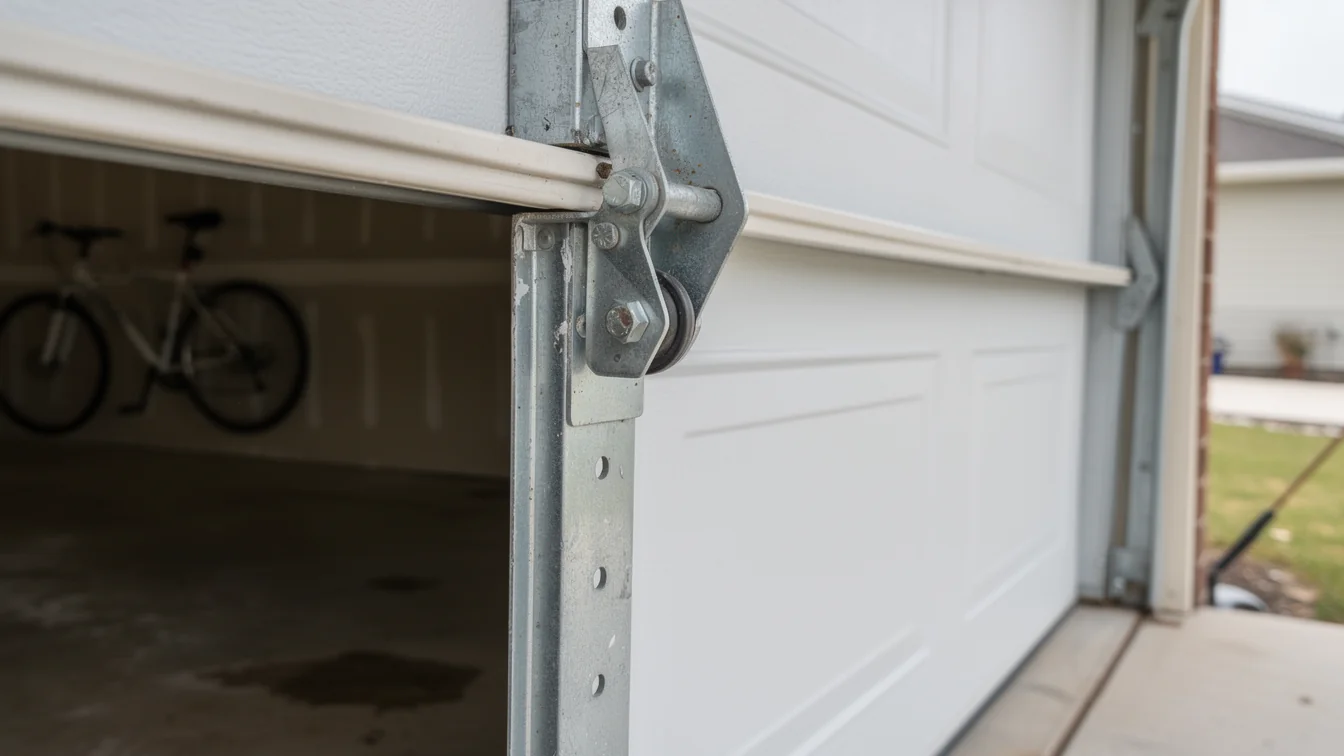
The other common cause is a bent track, usually from the bottom section getting clipped by a car bumper or a ladder leaning against it at some point in the house's history. Once the track has a kink in it, even a quarter inch, every pass the rollers make through that spot works the metal a little more. Eventually it comes loose from the wall bracket or the rollers ride up and over the lip. Either way, by the time you notice the door is off track, the damage has usually been building for months.
The area
What Most People Get Wrong
The instinct is to assume a door off its track means a new door. Most of the time that's not true. If the track is only bent in one short section and the panels themselves aren't dented, we can usually pull the track, straighten or replace that section, and reset the rollers for less than a full replacement. What does push a job from repair into replacement territory is when the track has pulled away from the framing in more than one spot, which happens more often on the older end of Mesquite's housing stock - homes closer to the 1973 to early-80s range, before some of the bracket hardware got beefed up in later builds.
The other mistake is DIY-forcing a door back onto the track. We see this a lot: someone pries the door back into the channel with a crowbar or a 2x4, gets it rolling again, and calls it fixed. The door usually runs fine for a week or two, then comes off again, often worse, because the rollers never seated correctly and the bent spot in the track is still bent. If a spring is under tension when someone does this, it's also how people get hurt. We won't pretend every off-track call is simple - sometimes the honest answer is that the track and the opener's travel limits both need resetting, which takes more than a quick push back into place.
What we find
How Local Conditions Play In
Mesquite sits in a moderate-heat climate band, not the extreme end, but summer heat still does real work on garage door metal over the life of a 20 to 40-year-old track system. Steel track expands slightly as temperatures climb through the afternoon, and the mounting brackets that hold it to the wall framing see that same cycle every single day for years. On a track that was installed slightly off-plumb to begin with - not uncommon in houses built through the 1980s and 90s boom when a lot of this area's stock went up - repeated heat expansion is what finally works a bracket loose enough for the track to shift out of alignment.
It's not a dramatic failure. It's slow, a sixteenth of an inch here, a loosened lag bolt there, until one day the door rides rough and then comes off. This is also why a track that looked fine in a spring inspection can be the one that fails in August. The moderate heat band here means we don't see the violent swings some regions get, but we do see steady, cumulative loosening, which is honestly harder to catch early than a single big weather event would be.
How we work
Season by Season
Spring is when we see the backlog from a winter of brackets working loose - doors that have been riding slightly crooked for months finally give. It's a good time to have track alignment checked before summer heat accelerates whatever's already loose. Through the hottest stretch of summer, expansion-related bracket loosening is the main driver, especially on original hardware from houses in the 1973 to 1998 range. Fall tends to be quieter for track calls, which makes it a reasonable window to get ahead of a problem rather than reacting to one. Winter here doesn't bring the hard freeze-thaw cycling that causes track trouble in colder climate bands, so we don't see a winter spike the way some regions do - this is one spot where Mesquite's moderate heat classification actually works in a homeowner's favor. The pattern we'd point to across the service area, which covers the mix of 1980s and 90s construction common in the twenty-some communities and neighborhoods around here, is that track problems build quietly and show up on the hottest days, not the coldest ones.
Talk to a local pro
Garage door trouble in Mesquite?
Same-day service with honest, upfront quotes.