Local detail
The Problem
Most houses in this part of Mesquite went up between 1973 and 2013, with the median landing around 1998. That means a huge share of the openers and torsion springs on the road are original equipment, now a couple decades into a job they were rated for maybe 10,000 cycles on. A door doesn't fail quietly. It tells you first - a pop when the spring starts to go, a rhythmic thump when a roller flattens out, a high screech when a bearing dries up. Homeowners hear these sounds for months, sometimes years, before anything stops working. The door still opens, so the noise gets filed under 'it's always done that.' It hasn't always done that. It started at some specific point, and that point was the first sign of wear, not a quirky habit of the door. By the time the door actually jams or the spring snaps clean through, you're usually looking at a same-day call instead of a scheduled one, and a bigger bill because something else got damaged on the way down.
The area
What Most People Get Wrong
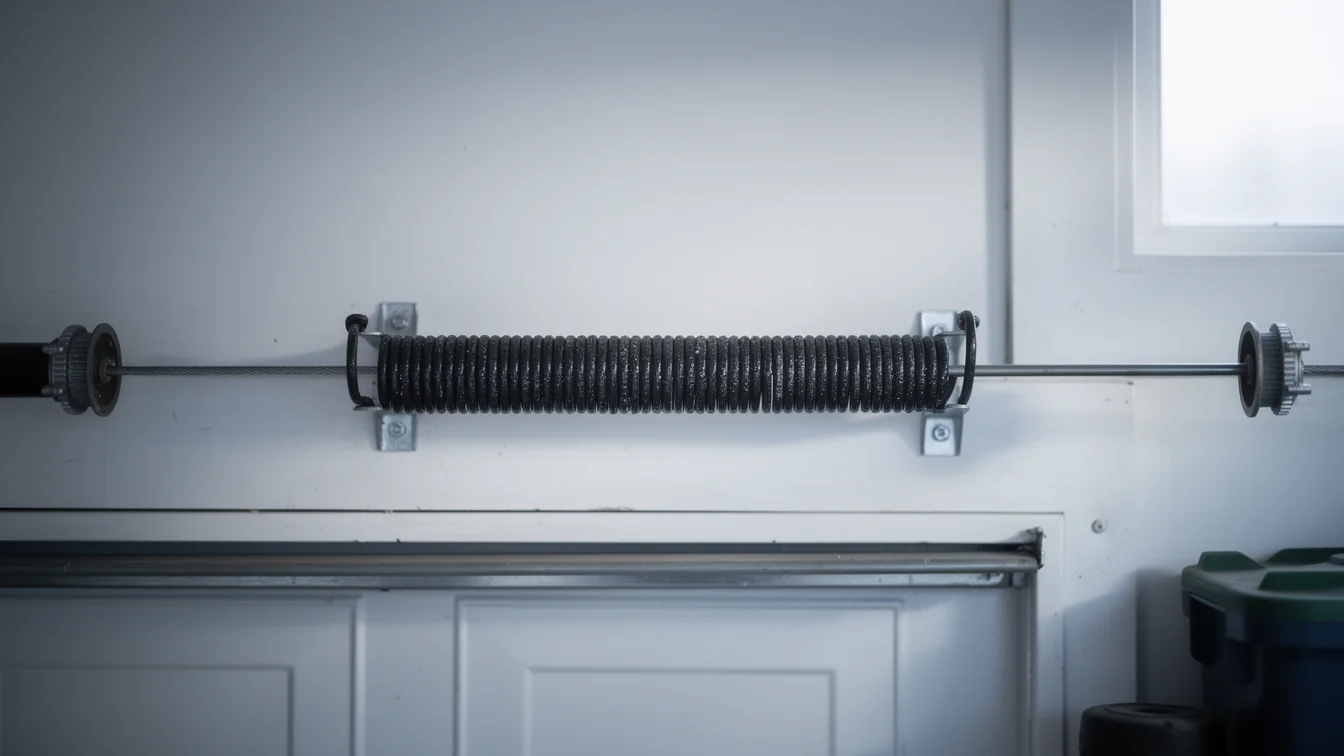
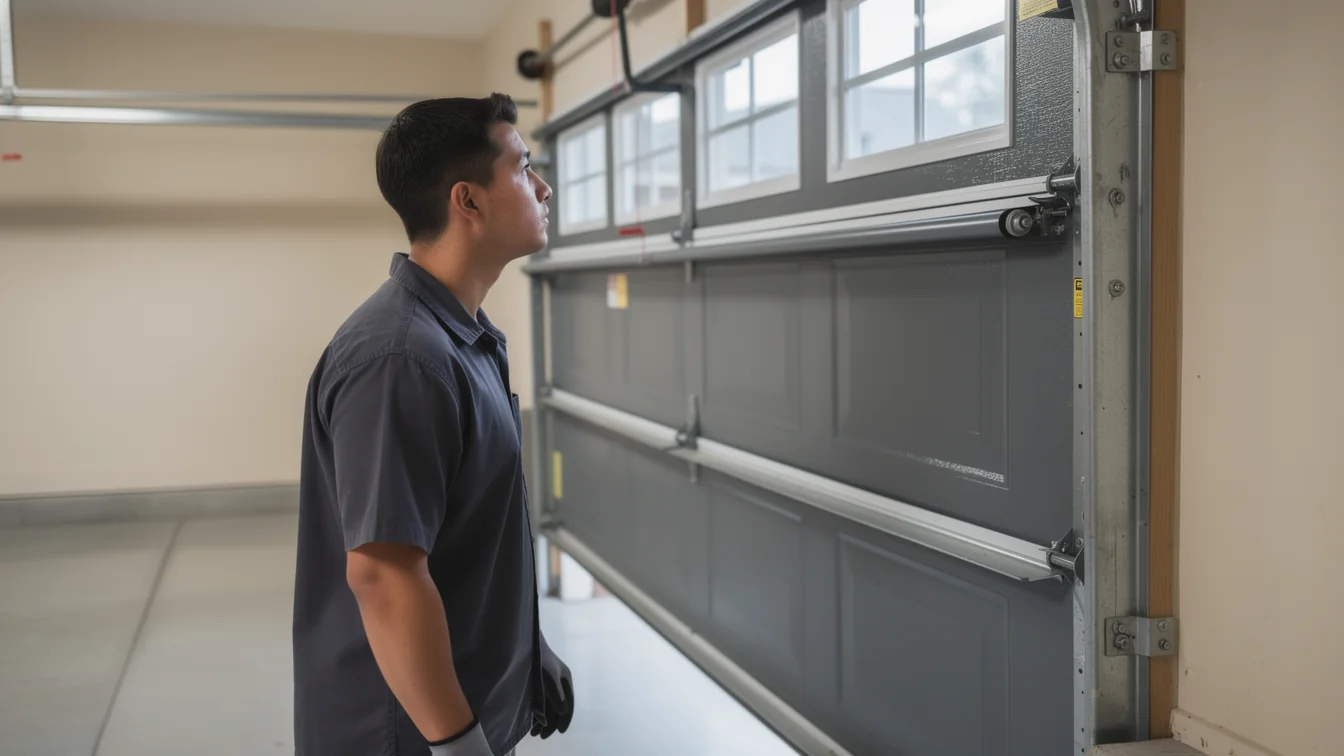
The most common mistake is spraying WD-40 on everything and calling it maintenance. WD-40 is a solvent, not a lubricant - it strips old grease off the springs and hinges faster than it protects them, which makes the noise worse within a few weeks. The second mistake is assuming a loud door just needs tightening. On the 1980s and 90s stock that makes up most of this area's housing - the stuff you'll find from Creek Crossing Estates out to Casa View Heights and Pleasant Grove - loose hardware is often a symptom, not the cause. Bolts work loose because a roller or bearing upstream is already binding and putting stress on the track and brackets it was never built to handle. Tightening the bolts quiets things down for a visit or two, then the noise comes back somewhere else on the same door. The actual fix is almost always upstream: rollers, bearings, or the spring itself. We don't try to diagnose a noise over the phone from a description alone - a grinding sound could be a worn roller or it could be a cable about to let go, and guessing which one it is before we're standing in front of the door is how the wrong part gets replaced.
What we find
How Local Conditions Play In
This area sits in a moderate heat band, not an extreme one, but moderate still means real swings between a 100-degree July afternoon and a cool January morning. Steel track, torsion springs, and galvanized hardware all expand and contract with that swing, every year, for as long as the door has been installed. On a door from the 1980s or 90s stock that makes up most of this part of Mesquite, that's 30-plus years of expansion cycles working on the same steel. Grease that was fine when the door was installed thins out in summer heat and runs off the parts that need it, leaving metal-on-metal contact on the rollers and hinges - which is exactly the squeal or chirp a lot of owners report in the hotter months. It's not a defect and it's not bad luck. It's predictable wear from predictable heat, happening to hardware that was never serviced after the builder put it in.
How we work
Season by Season
Spring and fall, with the smaller day-to-night temperature gap, tend to be the quietest months - hardware isn't being pushed from one extreme to the other every 12 hours, so noises that are present stay fairly steady rather than getting louder. Summer is when complaints spike. Heat thins out old grease, metal expands slightly, and a door that was tolerably noisy in April starts grinding by July. That's also when springs under marginal tension are most likely to finally let go, since the metal is already under more stress from heat than it is in cooler months. Winter mornings bring the opposite problem for a day or two at a time - contracted metal and stiffened grease make an opener strain harder on the first cycle of the day, which is often when owners hear a new knock or hesitation they didn't notice the night before. None of this means you need a different maintenance plan for every season. It means a noise that shows up in July and a noise that shows up in January can come from the same worn part, just stressed in different directions.
Talk to a local pro
Garage door trouble in Mesquite?
Same-day service with honest, upfront quotes.